01 / What I was briefed on
The AI worked. The obvious move was to build a destination.
AltaML's Venture Studio ran a clear pattern: take an AI capability, pair it with a partner's proprietary data, and build a company around it. Jurisage — a joint venture with Compass Law — was the legal-vertical bet.
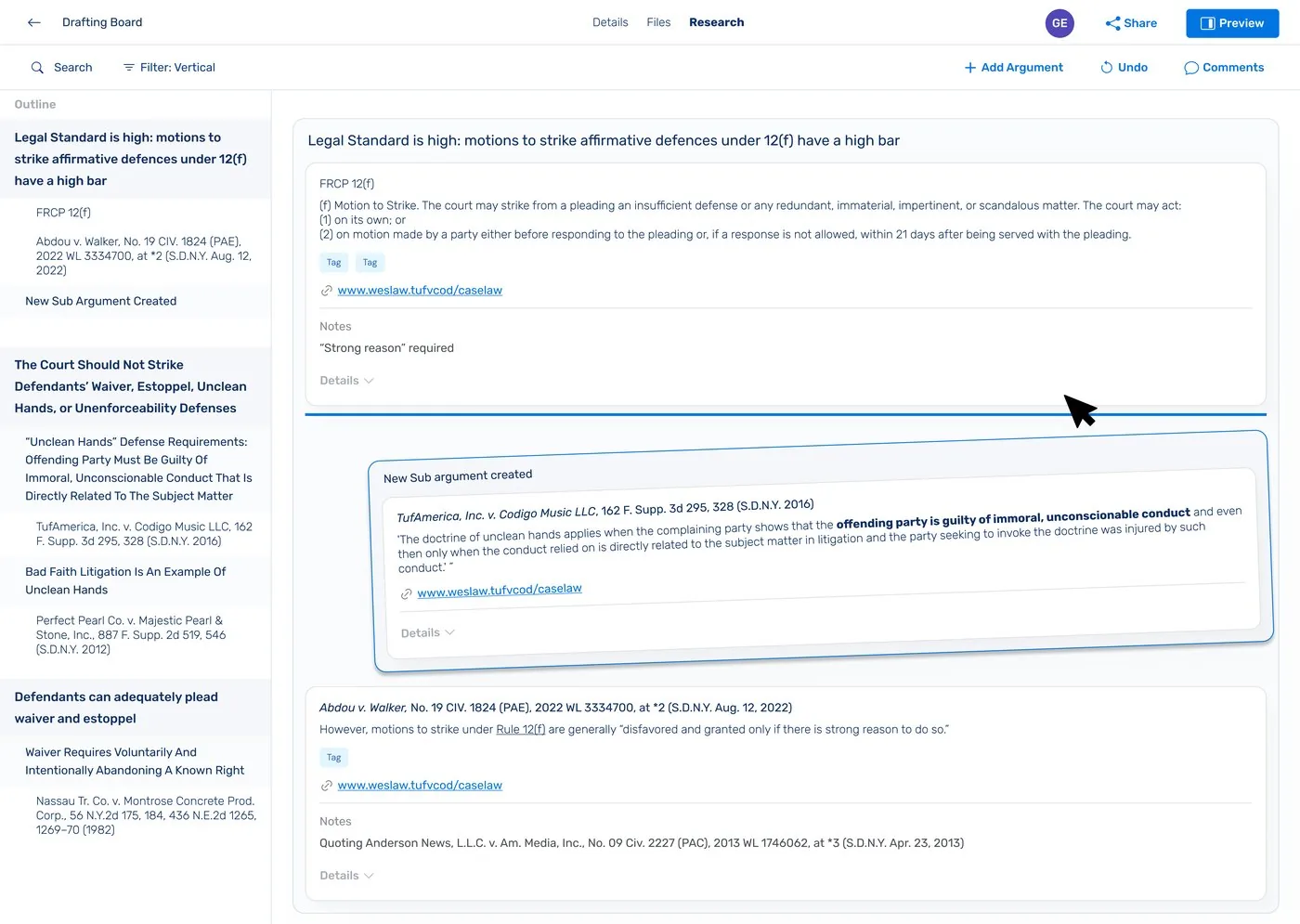
The technical anchor already existed and it was genuinely good: a sentence-level classifier that read a court judgment and tagged every line as Facts, Issues, Law, Analysis, or Conclusion. It ran against Compass Law's case-law corpus, one of the few complete collections of Canadian case law in existence.
So the default product instinct was the natural one. Build a destination — the AI-augmented research platform. Ask a legal question, get a legal answer. It's the product the capability points at, and that is exactly what made it worth interrogating.
02 / What the research changed
Nobody wanted another tab.
I ran more than twenty interviews across the people who'd actually have to use it — lawyers at firms of every size, law librarians, knowledge directors, and law students — and grouped the findings into patterns instead of chasing quotable lines.
The pattern was consistent and it was inconvenient. Legal research doesn't happen in a research destination. It happens inside the tools lawyers are already in: a Word document, a PDF, a courthouse site, a platform they already pay for. Every one of them described the same thing — you're reading, you hit a citation, and you need to know in seconds whether that case matters to the argument in front of you.
A destination product asks them to stop, switch, log in, and re-establish context. That's not a UX inconvenience. It's the whole cost, and it lands at exactly the moment they're concentrating hardest.
Which meant the brief was solving for the model rather than the user. The classifier was real, but it was answering "what can we do with this?" instead of "where does this need to be?" So the direction changed: same model, same data, delivered where the work already happens. We built a browser extension that recognises a case citation inline and surfaces what the judgment actually holds — without the lawyer leaving the page.
03 / What shipped
Thirty seconds instead of fifteen minutes.
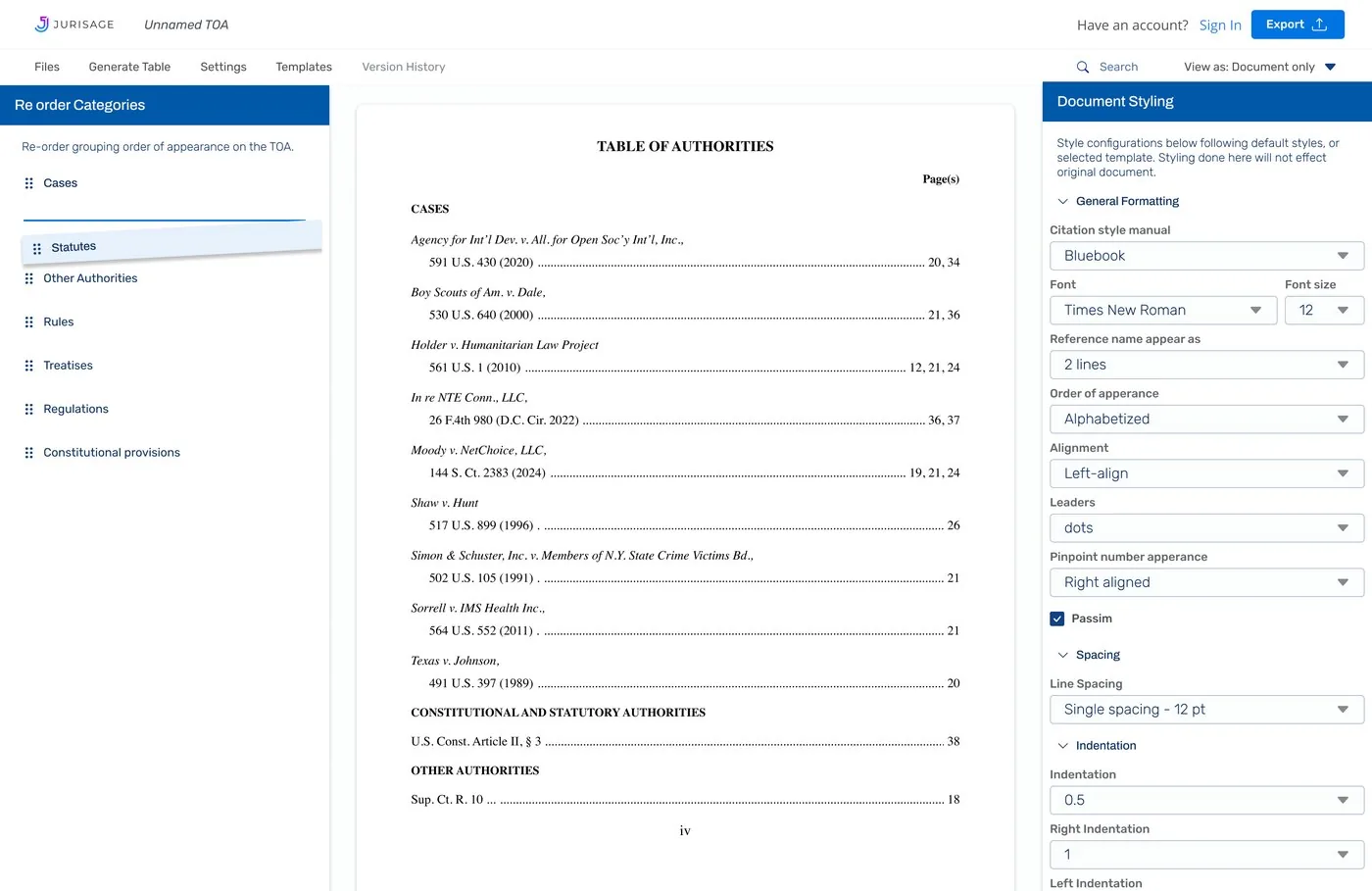
Jurisage's first product, MyJr, shipped as a browser plug-in. It spots case citations inline, wherever a lawyer is reading, and gives them the shape of the judgment — what it held, and whether it's worth their next fifteen minutes — in about thirty seconds. The philosophy the team settled on says it best: the highest-value insight from the narrowest possible input.
Two things came out of running the discovery in front of the build rather than alongside it. The MVP landed roughly 15–20% faster than the Venture Studio's baseline, because we weren't designing screens for a product the research would have killed. And the direction held up well enough under scrutiny to help anchor a follow-on commitment of over a million dollars from the joint venture.
I'll be precise about my part in that: I ran the research and I argued the case for the change. The instinct toward minimal-input, embedded tooling already existed in the team. What the interviews did was turn an instinct into evidence — which is what let the bet get made with conviction instead of hope.
20+
interviews across lawyers, librarians, and students
15–20%
faster MVP than the Venture Studio baseline
$1M+
follow-on commitment anchored by the direction
What happened next
The classifier was the capability. The extension was the product.
What I'd do differently: I ran the capability evidence and the workflow evidence in sequence when they could have run in parallel. The classifier's accuracy was never really the question — where it belonged was. Leading with the workflow research would have shortened the whole decision by a sprint and given the joint venture a faster path to a call.
Embedded legal AI is a category now. In 2020 it was a bet, and the bet came out of listening to how lawyers actually work rather than admiring what the model could do. That's the lesson I've carried into every AI product since: capability evidence and workflow evidence are not the same thing, and the workflow side almost always moves the bigger lever.